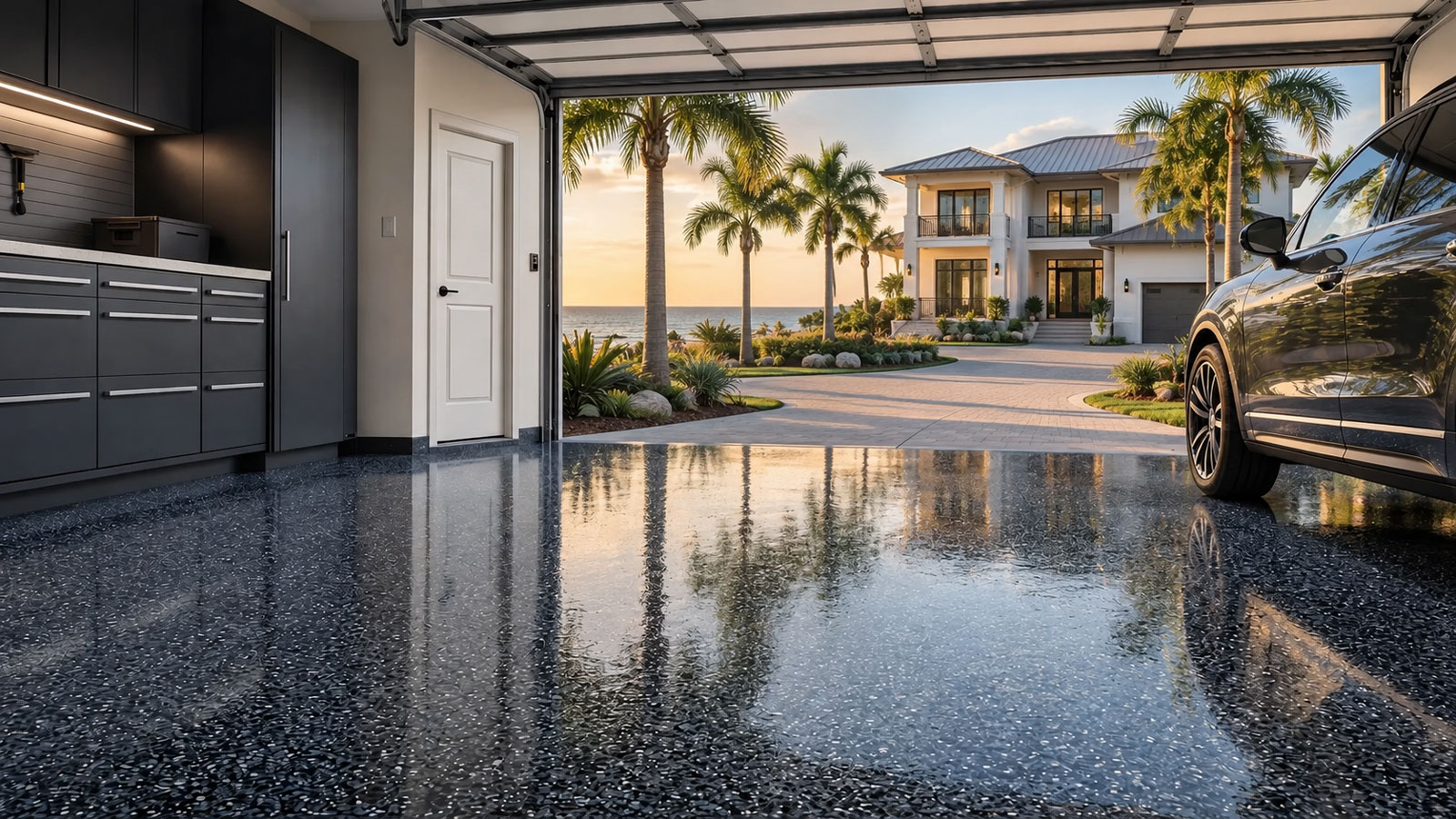
Garage Floor Coating in Mulberry, FL
Floor Coating Services in Mulberry, FL
Mulberry has a building and land-use history tied directly to Polk County's phosphate industry. The city calls itself the phosphate capital of the world, and its city-supported Phosphate Museum opened in 1986 in a former railroad depot, documenting old mining towns and rail transportation. A municipal redevelopment master plan dated February 2015 also describes railroad crossings and older commercial corridors. That history distinguishes Mulberry from Winter Haven's lake-centered growth, but it cannot establish whether any particular residential garage slab is industrially contaminated or structurally unsound.
Water planning provides a second, different local theme. Mulberry's 2030 Comprehensive Plan Conservation Element, adopted in March 2012, identifies the North Prong of the Alafia River and its 100-year floodplains as environmentally sensitive lands. It calls for coordination with the Southwest Florida Water Management District. This is a specific public watershed concern, not a prediction that a private garage experiences flooding or high slab moisture. A homeowner should inspect driveway grade, roof runoff and actual floor symptoms independently.
Established residential streets and newer additions can contain different garages and concrete pours. An old slab might have paint, oil or patched cracks; a newer one can retain curing agents or sealer. Sound prepared epoxy, polyaspartic or decorative-flake finishes may simplify everyday cleaning, but cannot redirect runoff or repair moving concrete. Request mechanical grinding, moisture evaluation where indicated, full layers, texture and curing details rather than choosing material from the area's industrial heritage.
Local Market Insight
Mulberry's city phosphate museum opened in 1986 in an old rail depot; a February 2015 redevelopment plan documents its railroad corridors. The 2012 conservation plan protects North Prong Alafia River floodplains. None of those public records diagnoses contamination or water at a private garage.
What Affects the Cost of Garage Floor Coating in Mulberry?
Mulberry quotes should reflect the floor itself rather than proximity to a historic phosphate railroad or industry. An established garage may have past coatings or workshop use, while a newer slab can contain curing treatments requiring removal.
Water flowing under a garage door requires different correction from surface preparation or normal rain tracked in by cars. Ask for a written estimate distinguishing drainage and repair work from the selected finish.
- Historical building and garage changes: Mulberry's railroad-era neighborhoods can have garages added or repoured later. Inspect actual concrete strength, patches and surface age rather than assuming residential slabs date to mining operations.
- Old coatings or vehicle deposits: Prior paint, epoxy, oil or sealer may prevent adhesion. An installer should inspect the actual surface and mechanically remove incompatible films, not assume pollution from the neighborhood's history.
- Alafia watershed context: The city's plan protects mapped floodplains along the North Prong, but that cannot establish moisture at one home. Inspect real driveway, gutter and threshold water paths.
- Cracks and surface deterioration: Stable surface defects may be repairable during preparation; movement or serious deterioration requires separate evaluation. A decorative layer cannot make moving concrete structurally sound.
- Access, storage and edges: An attached garage, detached workspace or irregular floor can have different grinder access, steps, cabinets and perimeter work. Measure and clear the entire surface.
- Finish and return-to-parking: Choose flakes, topcoat texture and UV behavior around garage use, summer humidity and product cure limits. A one-day promise does not replace proper grinding or repairs.
Call for a clear, project-specific estimate — or request one online.
Mulberry's Phosphate and Railroad History Versus Actual Garage Concrete
Mulberry's official Phosphate Museum describes the city as the phosphate capital of the world and explains its collections of fossils, phosphate-industry exhibits and railroad memorabilia. The museum opened in 1986 using a former rail depot, while a 2015 city redevelopment-area master plan documents the continued presence of rail lines and numerous road crossings. These are strong local historical anchors, but they must never be presented as evidence of chemicals or physical defects beneath a particular residential garage.
A residential floor in an established street might have been repoured years after construction or used for storage and hobbies rather than heavy industry. Even a newer garage can have curing compounds or sealer. Inspect previous paints, oil, cracks and repairs after moving stored equipment before choosing a coating.
Mechanical profiling is essential where the chosen product requires it, and incompatible films or weak concrete may need removal. A decorative resin cannot compensate for an active crack, structurally moving slab or unexplained moisture condition.
A detailed estimate should specify removal, grinding, repairs, edge treatments, complete coating layers and cure restrictions. The customer's actual concrete and use history matter more than assumptions derived from the city's industrial identity.
The North Prong Alafia Watershed and Private Garage Runoff
Mulberry's adopted 2030 Comprehensive Plan Conservation Element explicitly identifies the North Prong of the Alafia River's mapped 100-year floodplain as environmentally sensitive land. Its policy directs consultation with the Southwest Florida Water Management District during development or redevelopment adjoining that floodplain. These local statutory planning rules protect the wider watershed and do not establish whether a specific garage is damp.
At the home, inspect where roof gutters discharge and whether the driveway channels stormwater to the overhead-door sill. A wet vehicle may create a temporary puddle in a dry room, while persistent dark patches without apparent surface water can warrant separate concrete-moisture testing. Different water sources have different remedies.
A decorative garage coating does not replace floodplain protection, correct a driveway slope or stabilize concrete movement. Address active runoff first; when the slab is suitable, a continuous finish may make routine cleaning easier after rain.
Ask for physical texture samples and maintenance guidance, then confirm appropriate temperature, moisture conditions and the complete curing schedule. A finish should be selected around observed property needs rather than a generic assertion that every Mulberry garage is flood-prone.
Frequently Asked Questions
Does Mulberry's phosphate-mining history mean my garage slab is contaminated?
No. The city's mining and railroad history is well documented, but cannot establish contamination in private residential concrete. Ask about the garage's actual prior use and inspect old paint, vehicle residue and substrate condition before coating.
Does the North Prong Alafia floodplain mean my garage is wet?
No. Mulberry's conservation plan protects specific mapped floodplains and watershed functions, not every residential garage. Check property drainage, threshold water history and unexplained slab dampness, with appropriate testing where warranted.
Can decorative epoxy prevent rain entering at the garage door?
No. Coating cannot change the driveway's slope, protect against floodwater or repair structural leaks. Address recurring exterior entry with suitable drainage or grading work before installing a decorative system.
Could an established Mulberry garage still have newer concrete?
Yes. Garages may be added or floors repoured long after a house was built. The contractor should inspect actual patchwork, cracks, previous coatings and the necessary surface profile rather than assume an industrial-era slab.
What should a Mulberry coating proposal include?
Request old-film removal, grinding, crack and patch work, moisture evaluation when indicated, full system layers, edge treatment, texture, maintenance requirements and a realistic cure schedule. Any exterior drainage correction should be separately specified.
Mulberry Neighborhoods & Local Context
Phone Quote Line
Speak with a floor coating specialist about your project and get a realistic estimate range.
(863) 400-1616Typical Two-Car Garage
$3,000–$5,500
Final pricing depends on floor size, concrete condition, preparation, coating type, and finish options.