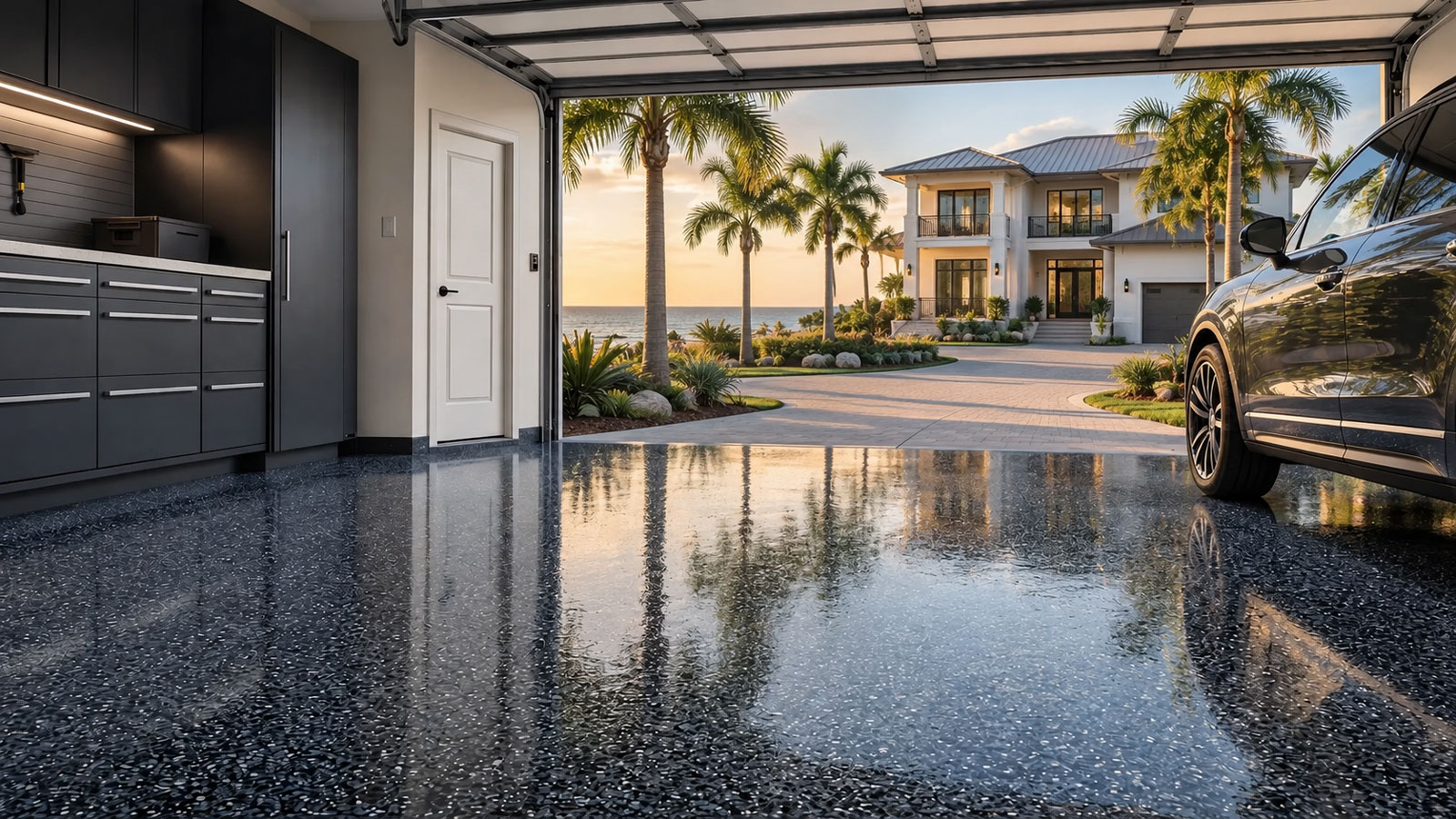
Garage Floor Coating in Lakeland, FL
Floor Coating Services in Lakeland, FL
Lakeland's identity is grounded in a well-documented lake system and several generations of residential development, not simply its position as western Polk County's population center. City documents identify 38 named lakes and a 2019 Water Quality Management Plan addressing eleven priority lakes. The city also recognizes seven local historic districts, including Dixieland and Lake Morton. That combination can create varied garage-building histories, but neither historic designation nor lake proximity establishes the condition of a private garage slab.
Lakeland adopted its updated comprehensive plan in July 2021, and subsequent plan revisions address growth and conservation. Residential neighborhoods have expanded outward while established streets have been renovated and reused. A garage might be added or repoured long after its house, and recently placed concrete can still contain curing compounds or surface sealer. Before choosing epoxy or polyaspartic, inspect prior paint, cracks, patchwork, contamination and actual substrate suitability.
Central Florida rainfall makes roof discharge and driveway drainage worth observing, but city lake-management data cannot prove damp concrete at a particular address. Distinguish rainwater crossing a threshold, water tracked indoors by cars and moisture suspected within the slab. A decorative-flake or other continuous system on sound prepared concrete may improve cleaning, but cannot redirect outside water or repair structural movement. A reliable quote details grinding, repairs, complete layers and curing.
Local Market Insight
Lakeland maintains 38 named lakes and a 2019 water-quality plan focused on eleven priority lakes; it also protects seven historic districts. Its comprehensive plan was adopted in July 2021. These are distinct municipal anchors for runoff awareness and variable housing age, not diagnoses of private concrete.
What Affects the Cost of Garage Floor Coating in Lakeland?
An established Lakeland garage may contain several generations of paint or patches, while newer construction may need removal of curing materials. Surface condition and access determine how much prep is required, not a neighborhood name.
Water entering from a gutter or a driveway is a separate issue from coating suitability. Ask installers to identify any drainage exclusion and explain the exact repairs, profile and finished system they are pricing.
- Historic-house versus garage age: Lakeland's seven historic districts include buildings of different periods, but accessory garages may be later additions. Examine actual pour history, repairs and old paint instead of assuming concrete is as old as the house.
- Lake-system drainage context: The city's water-quality program addresses public lakes. A garage requires its own inspection for gutter discharge, threshold inflow and persistent dampness, with runoff correction separate from decorative finishing.
- Previous paint or sealers: Floor paint, builder sealer and oil deposits can interfere with adhesion. Mechanical stripping and grinding should reach a sound profile before a new compatible coating is applied.
- Cracks and slab deterioration: Patchwork, spalling, joints and moving cracks change the repair scope. A resin floor may cover stable repairable defects but cannot stabilize structural movement or overcome weak concrete.
- Garage layout and household access: Storage, steps, utility areas and attached or detached configurations can alter equipment staging and perimeter grinding. The quote should cover the complete measured working surface.
- Humidity, topcoat and cure: Hot and humid weather affects installation conditions but does not itself prove slab moisture. Select texture, finish chemistry and vehicle-return rules around observed concrete and product limitations.
Call for a clear, project-specific estimate — or request one online.
Lakeland's Historic Districts and Later Garage Construction
The City of Lakeland lists seven designated historic districts: Beacon Hill, Biltmore-Cumberland, Dixieland, East Lake Morton, Lake Hunter Terrace, Munn Park and South Lake Morton. These areas preserve different streetscape histories, while the city also plans for residential expansion and reinvestment under a comprehensive plan adopted July 19, 2021. These civic facts establish diversity in the built environment but do not date individual garage slabs.
An older dwelling can have a modern attached garage or a detached building with concrete replaced during renovation. A more recent home can contain curing sealer, patches or old coatings left by earlier occupants. Ask about the slab's actual age and use, then inspect it after cabinets and storage are moved.
Grinding should remove incompatible layers and provide the manufacturer's required profile. Repairable cracks and weak surface material need attention before coating, while serious movement or continued moisture intrusion may demand separate evaluation.
A useful Lakeland estimate specifies surface assessment, mechanical preparation, film removal, repairs, edges, decorative layers and a realistic time before parking. No homeowner benefits from an age-based surcharge unsupported by what is on the floor.
Thirty-Eight Lakes, Stormwater and Garage Thresholds
Lakeland's current comprehensive-plan conservation section identifies 38 named lakes and points to a city water-quality program updated in October 2019 that emphasized eleven priority lakes. Public lake protection and stormwater controls are essential to the city, but these records cannot determine whether one homeowner's garage is wet.
Inspect how rain reaches the property. Water from a downspout or a low driveway may cross the overhead-door sill, while an otherwise dry garage may simply collect water on parked vehicles. If bare concrete remains damp after dry weather, evaluate moisture according to the proposed coating's limitations rather than assuming nearby lakes are responsible.
A coating does not repair a driveway slope, stop flooding or stabilize a moving joint. Where exterior inflow is active, address that first. On sound prepared concrete, a continuous floor can make ordinary dirt and tracked-in water easier to clean.
Ask for a physical sample balancing traction and ease of sweeping, then confirm humidity, concrete-temperature and curing requirements. The correct system matches observed slab conditions and household use, not a sweeping claim of waterproofing in lake country.
Frequently Asked Questions
Does living near one of Lakeland's 38 lakes mean my garage slab is damp?
No. City lake and stormwater programs address landscape resources, not moisture inside an individual floor. Inspect actual drainage and test the concrete where warranted.
Are garages in Lakeland's historic districts too old to coat?
Not necessarily. Garage floors may have been added or repoured long after the home was built. Surface soundness, old finishes and repair needs determine coating suitability.
Can a decorative resin finish stop rainwater entering from a driveway?
No. Grading, roof drainage or low thresholds require separate attention. A coating cannot redirect stormwater or serve as structural floodproofing.
Is a quick-curing polyaspartic always best in Florida humidity?
No. Preparation, actual moisture, temperature limits, texture and full-system chemistry matter more than an advertised cure speed. Ask when vehicles can safely return.
What should a Lakeland garage-floor quote document?
Request old-coating removal, mechanical grinding, cracks and patches, moisture evaluation where indicated, full layers, finish texture, edge work and a clear curing schedule.
Lakeland Neighborhoods & Local Context
Phone Quote Line
Speak with a floor coating specialist about your project and get a realistic estimate range.
(863) 400-1616Typical Two-Car Garage
$3,000–$5,500
Final pricing depends on floor size, concrete condition, preparation, coating type, and finish options.